Biology
PROVIDING A FOUNDATION IN BIOLOGICAL SCIENCE, SPANNING MOLECULAR, CELLULAR, AND ORGANISMAL LEVELS
The program prepares students for professional and research careers in health, medicine, and biotechnology. Students interested in healthcare or laboratory careers gain the background needed for clinical work or graduate study in biology, molecular biology, or biochemistry.
Students in the Biology program will:
- Develop a deep understanding of biological structure and function
- Strengthen skills in experimental design, data analysis, and scientific reasoning
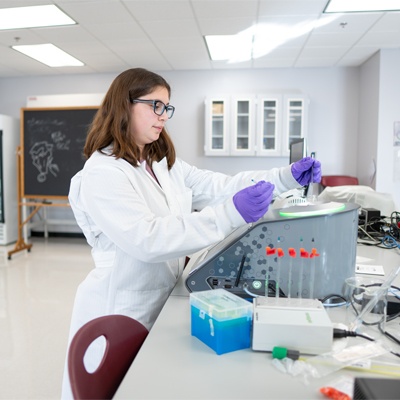
- Gain hands-on experience in laboratory methods, sample preparation, and quantitative measurement
This four-year program is built for students pursuing a focused and disciplined path toward a career in science, healthcare, or graduate study.
Request Information
Career
Options
Career options with this major include, but are not limited to:
- Healthcare careers such as physician, physician assistant, dentist, optometrist, or other medical professional roles
- Laboratory work in pharmaceutical, food, or cosmetic industries
- Clinical or diagnostic laboratory technologist
The Biology program prepares students with critical thinking, problem-solving, and laboratory skills that are highly valued in research, healthcare, and biotechnology careers.
Faculty
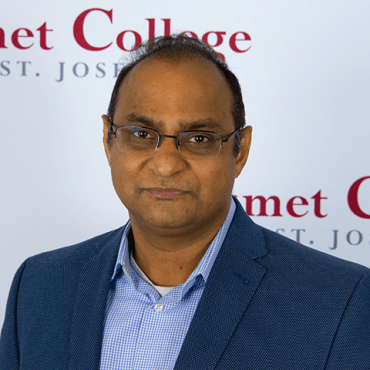
Ahmed Lakhani, Ph.D.

Daniel Stroik, Ph.D.
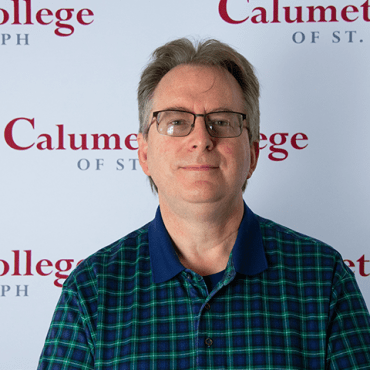
David Harnish, M.L.I.S.
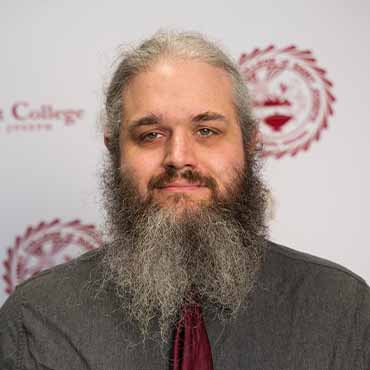
Michael Keiderling, Ph.D.

Tracy Stone, Ed.D.

Program
Objectives and requirements
120 credit hours
Scientific Knowledge and Critical Thinking:
- Students will demonstrate a level of competency for understanding core principles.
- Students will demonstrate the ability to locate and critically evaluate scientific information.
Research Skills and Problem-Solving Ability:
- Students will demonstrate the ability to design studies to test the biological and chemical hypothesis.
- Students will demonstrate the ability to learn independently and to critically evaluate the significance of research results.
Specific Expertise:
- Students will develop and justify a range of sample preparation, data analysis, various scientific calculations (enzyme kinetics, molarity, stoichiometry).
- Students will be able to validate techniques of analytical balances, autoclave, UV/Vis spectrometer, IR spectrometer, gel electrophoresis, simple and fractional distillation, PCR, DNA extraction, titrations, pH analysis and normalization.
Communication:
- Students will demonstrate the ability to communicate the results of scientific research verbally and in writing.
Ethics and Advocacy:
- Students will demonstrate the ability to design studies that meet professional ethical standards.
- Students will demonstrate an awareness of the relevance of biological and chemical knowledge to human health and welfare.
38 credit hours General Education
Students must complete the following:
- MATH 104 Precalculus
- BIOL 115 Cell and Evolution (Lecture, Lab, Supplemental)
- PSY 100 Introduction to Psychology
31 credit hours: Requisites for the Major
- BIOL 205 Mendelian and Molecular Genetics (Lecture, Lab, Supplemental);
- BIOL 230 Microbiology (Lecture, Lab)
- BIOL 300 Human Anatomy and Physiology I (Lecture, Lab)
- BIOL 305 Human Anatomy and Physiology II (Lecture, Lab)
- CHEM 200 General Chemistry I Chemistry (Lecture, Lab, Supplemental)
- CHEM 205 General Chemistry II (Lecture, Lab, Supplemental)
- MATH 171 Principles of Statistics
- MATH 230 Calculus I
23 credit hours: Upper-Level Courses in Major
- BIOL 315 Development, Structure and Evolution (Lecture, Lab)
- BIOL 372 Biomedical Health Research Literacy I
- CHEM 310 Organic Chemistry I (Lecture, Lab)
- CHEM 311 Organic Chemistry II (Lecture, Lab)
- PHYS 300 Physics I (Lecture, Lab)
- PHYS 305 Physics II (Lecture, Lab)
28 hours: Electives
You Belong
at Calumet College of St. Joseph!